
Are you thinking about tapping into the value of your home but feeling confused by the options? When it comes to borrowing against your property, understanding the difference between an equity loan and a HELOC can save you time, money, and stress.
Knowing which one fits your needs can unlock better financial decisions and help you achieve your goals faster. Keep reading to discover the key differences that could make a big impact on your wallet and peace of mind.
Equity Loan Basics
Understanding equity loans helps homeowners use their home’s value wisely. These loans tap into your home’s equity to provide cash. Knowing the basics helps you decide if an equity loan fits your needs.
Definition And Features
An equity loan is a type of loan using your home’s value as security. You borrow a set amount based on your home’s equity. The interest rate is usually fixed. You repay the loan in regular monthly payments over a set time.
How Equity Loans Work
You get a lump sum of money upfront. The loan amount depends on your home’s current value minus what you owe. You pay back the loan with interest over several years. The loan stays separate from your main mortgage.
Typical Uses
Many use equity loans for home improvements or repairs. Others choose them to pay off high-interest debts. Some use the money for education or big expenses. The fixed payments make budgeting easier.

Credit: www.citizensbank.com
Heloc Essentials
Understanding HELOC essentials helps clarify how this loan works. It offers a flexible way to use your home’s equity. Many homeowners choose HELOCs for various financial needs. This section breaks down what a HELOC is, how it operates, and common uses.
What Is A Heloc?
A HELOC is a Home Equity Line of Credit. It lets you borrow money using your home’s equity. Unlike a fixed loan, it works like a credit card. You can borrow and repay multiple times during the draw period. The credit limit depends on your home’s value and loan balance.
How Helocs Operate
HELOCs have two phases: draw period and repayment period. During the draw period, you can borrow money as needed. Payments are usually interest only. After this, repayment starts. You pay back both principal and interest in fixed amounts. Interest rates are often variable, changing with the market.
Common Applications
Many use HELOCs for home repairs and renovations. Others pay off high-interest debts with lower rates. Some cover education costs or unexpected expenses. The flexible borrowing helps manage cash flow. It suits people who want access to funds without a lump sum loan.
Comparing Interest Rates
Comparing interest rates is essential when choosing between an equity loan and a HELOC. These rates affect how much you pay over time. The type of interest rate impacts your total cost and monthly budget.
Fixed Vs. Variable Rates
Equity loans usually have fixed interest rates. This means the rate stays the same during the loan term. You always pay the same amount of interest each month. This makes planning your budget easier.
HELOCs often have variable interest rates. These rates can change based on market conditions. Your rate might go up or down over time. This can cause monthly payments to change.
Impact On Monthly Payments
Fixed rates create steady monthly payments. You know exactly what to expect each month. This helps avoid surprises in your budget.
Variable rates cause monthly payments to fluctuate. Payments can be low at first. They might increase if interest rates rise. This can make budgeting harder.
Choosing between fixed and variable rates depends on your comfort with risk. Fixed rates offer stability. Variable rates might save money if rates stay low.
Repayment Structures
Repayment structures differ greatly between equity loans and HELOCs. Understanding these differences helps choose the best option for your needs. Each type has unique rules about how and when you repay the borrowed money.
Equity Loan Repayment Terms
Equity loans require fixed monthly payments. These payments cover both principal and interest. The loan has a set term, usually 5 to 30 years. You start repayment right after taking the loan. Payments stay the same throughout the loan period. This structure gives clear budget planning. No surprises with changing payment amounts.
Heloc Draw And Repayment Periods
HELOCs have two phases: draw and repayment. The draw period lasts about 5 to 10 years. During this time, you borrow money as needed. You usually pay interest only on the amount borrowed. After the draw period ends, the repayment period begins. Then, you pay back both principal and interest. Payments can increase since you repay the full balance. This flexible structure suits changing financial needs.
Borrowing Limits And Access
Understanding borrowing limits and how you access funds is key when choosing between an equity loan and a HELOC. Both let you use your home’s value to get money. Yet, they handle loan amounts and withdrawals differently. These differences affect how much you can borrow and how easily you get your money.
Loan Amount Determination
An equity loan gives a fixed sum based on your home’s value and what you owe. Lenders usually allow borrowing up to 80-85% of your home’s value minus your mortgage balance. This means the loan amount is set when you apply and does not change.
A HELOC, or home equity line of credit, works more like a credit card. The lender sets a maximum credit limit based on your home equity. You can borrow any amount up to that limit during the draw period. The limit can be similar to an equity loan but is more flexible in use.
Flexibility In Fund Access
Equity loans give you the full loan amount all at once. You start paying interest on the total amount immediately. This suits large one-time expenses, like home repairs or debt consolidation.
HELOCs allow borrowing multiple times within the credit limit. You only pay interest on what you borrow. You can borrow, repay, and borrow again during the draw period. This makes HELOCs better for ongoing or unpredictable costs.
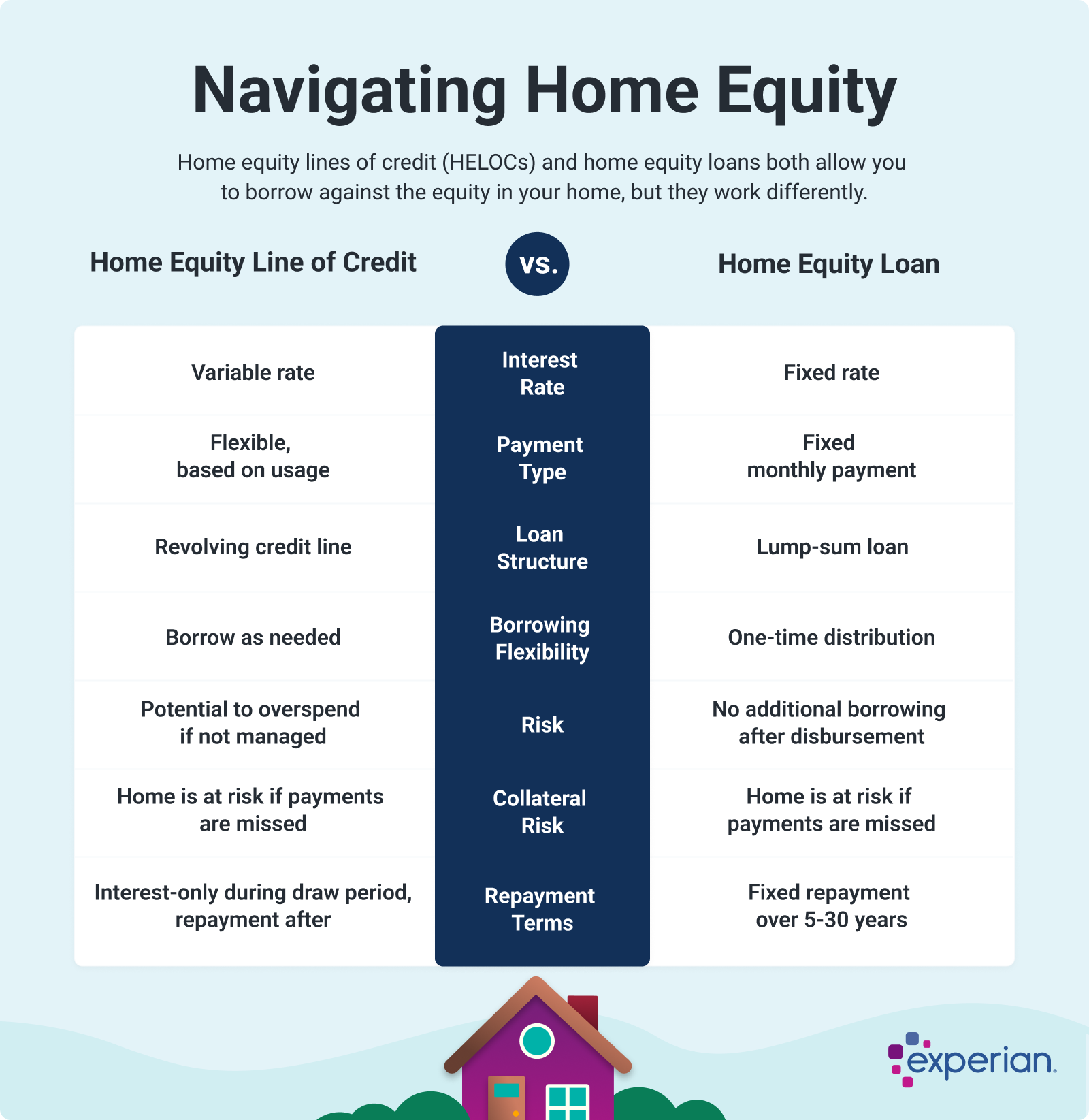
Credit: www.experian.com
Risks And Benefits
Understanding the risks and benefits of equity loans and HELOCs helps you make smart financial choices. Both use your home’s value but work differently. Knowing their pros and cons avoids surprises.
Advantages Of Equity Loans
Equity loans give a lump sum of money. You get a fixed interest rate and fixed monthly payments. This helps with budgeting and planning. The loan term is usually set, so you know when it ends. You can use the money for big expenses like home repairs or debt consolidation. The interest rates are often lower than credit cards or personal loans.
Benefits Of Helocs
HELOCs work like a credit card with a credit limit based on your home equity. You can borrow money as needed during the draw period. Interest rates are usually lower than other loans but can change over time. You pay interest only on the amount you use. This flexibility suits ongoing expenses or emergencies. You can reuse the credit line without reapplying, saving time and effort.
Potential Drawbacks
Equity loans require paying back the full amount even if you use only part of it. Missing payments can lead to losing your home. HELOCs have variable rates that can rise, increasing your payments. This makes budgeting harder. Both loans use your home as collateral, so risk is high. Overspending or not repaying can cause financial trouble. Always consider your ability to repay before borrowing.
Choosing The Right Option
Choosing the right option between an equity loan and a HELOC depends on your financial needs and goals. Each has its benefits and drawbacks. Understanding these can help you make a smart choice. Think about how you plan to use the money and how flexible you need the loan to be.
Factors To Consider
Consider the interest rates. Equity loans often have fixed rates. HELOCs usually have variable rates. Fixed rates mean steady payments. Variable rates can change over time. Think about your budget and if you want predictable costs.
Look at the loan term. Equity loans have a set repayment period. HELOCs allow borrowing over a period, then repay later. Decide if you want a lump sum or ongoing access to funds.
Evaluate your repayment ability. Equity loans require fixed monthly payments. HELOC payments might vary, especially if you only pay interest at first. Choose what fits your income and spending habits.
Situations Favoring Each Type
Choose an equity loan for large, one-time expenses. Examples include home renovations or debt consolidation. It provides a set amount with fixed payments.
Pick a HELOC for ongoing or unpredictable costs. This works well for projects that need funds in stages. You can borrow as needed and pay interest only on what you use.
HELOCs suit those who want flexibility. Equity loans suit those who want stability. Match the loan type to your financial plan and comfort level.

Credit: www.1stunitedcu.org
Frequently Asked Questions
What Is An Equity Loan In Home Financing?
An equity loan lets you borrow a lump sum using your home’s equity. It has fixed interest rates and set repayment terms, making budgeting easier. You repay it in fixed monthly payments over a set period, usually 5 to 30 years.
How Does A Heloc Differ From An Equity Loan?
A HELOC is a revolving credit line secured by your home’s equity. You can borrow, repay, and borrow again during the draw period. Interest rates are usually variable, and payments fluctuate based on the amount borrowed.
Which Is Better: Equity Loan Or Heloc?
Choosing depends on your financial needs. Equity loans suit fixed, large expenses with predictable payments. HELOCs offer flexibility for ongoing costs or emergencies but have variable rates and payment amounts.
Can I Use Equity Loans And Helocs For Home Improvements?
Yes, both are popular for home renovations. Equity loans provide a lump sum upfront, while HELOCs let you draw funds as needed. Both options can increase your home’s value if used wisely.
Conclusion
Equity loans and HELOCs both use your home’s value to borrow money. Equity loans give a lump sum with fixed payments. HELOCs act like a credit card with a changing balance. Choose based on your needs and payment comfort. Understanding these differences helps you pick wisely.
Use what suits your budget and plans best. This knowledge saves money and stress later. Keep your options clear and simple. Your home’s value can work for you in different ways.


